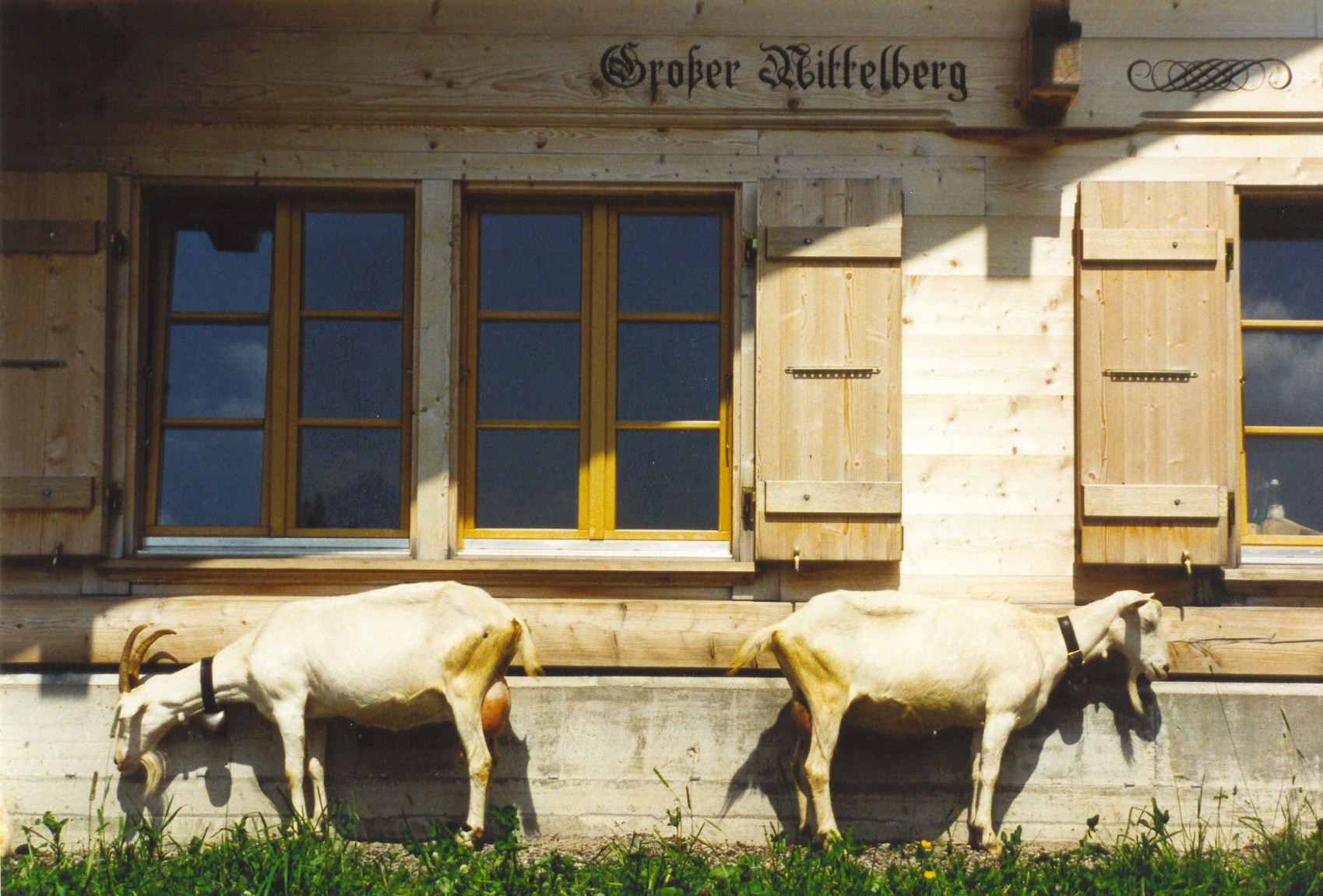
Since so many have asked, here it is: a complex procedure involving cats, dogs, children, infants, diplomacy, anger management skills, and lightning fast reflexes.
Step One: Wake Up
A milk goat gets incredibly full of milk. Milking has to take place on a schedule: every 12 hours or bust, so to speak. So even on your day off, you are still on a routine. This is just fine because the children get you up even before the moaning goats do.
Step Two: Feed the Kids
Not the goats, the children. They complain a lot when hungry. Get this out of the way fast. Get that coffee down while you're at it.
Step Three: Get the Gear Ready
You need something to put the milk in, a bucket, and something to clean her off with, a soapy pail and a rag. She's been laying in poop most likely. Goats are not particular about where they poop and she probably had her evening constitutional just before she bedded down for the night.
Step Four: Go Outside
This involves a hallway, negotiating stairs, the dog who is antsy because you forgot to feed her, the bucket which needs to be sterile, the
sloshy soapy water which can't slosh into your bucket or you're going to have to
resterilize it, the baby you must also carry and who wants the rag in the
sloshy soapy pail, the other three kids who are being knocked into walls by the hungry dog, and someone crying. Figure out who that is and bribe them. Open the door, yell at the dog before she knocks a toddler down the stairs, and maneuver into the backyard. If it is a nice day, the older kids will head for the
swing set. If not, they will cry, or at least complain. Either way, be stern or they will have nothing to brag about when they are old, "Oh yeah? My mom used to take me out in six feet of snow in a thunderstorm to milk goats!"
Step Five: Shut the Gate to the Backyard
When you deal with animals, this is always a good rule. Whenever you go through a gate,
shut it behind you. This rule is important because if you forget, the procedure will get a whole lot longer and it will involve neighbors.
Step Six: Get the Baby and the Gear into the Milk House
Don't trip over the dog. Don't slosh water onto the baby. Don't drop anything, especially the baby. You may yell at the dog or cat if you are tripped, otherwise greet warmly.*
Step Seven: Stow Gear and Start Feeding and Watering
Check every water trough every feeding. Animals can live without food for a few days but can sicken in hours without water on a hot humid day. If the water is clear and full, feed cats, put ration on the milking stand and carry the alfalfa to the goat pen. This will all need to be done one handed because you are still carrying the baby. Do not let her eat the alfalfa as she only has a one-chambered stomach. She will insist you are mistaken. Remain firm.
Step Eight: See Step Five
There's a gate between you and the goats and their hay basket. Manage baby, alfalfa, gate and goats without a goat escaping or you dropping anybody(thing) and without any yelling.
Don't forget to close that gate.
Dump alfalfa in the alfalfa bin, grab the collar of the oldest nanny goat (never ever forget the pecking order or the younger gals will pay dearly all day) and guide her to the gate. She is eager to follow you, so this takes little effort. She will walk briskly. If you are late, she will trot. Try to keep up. The baby likes it when you run. She will giggle.
Close that gate when you, the baby, and the goat are through it.
Step Nine: Reassure the Goat
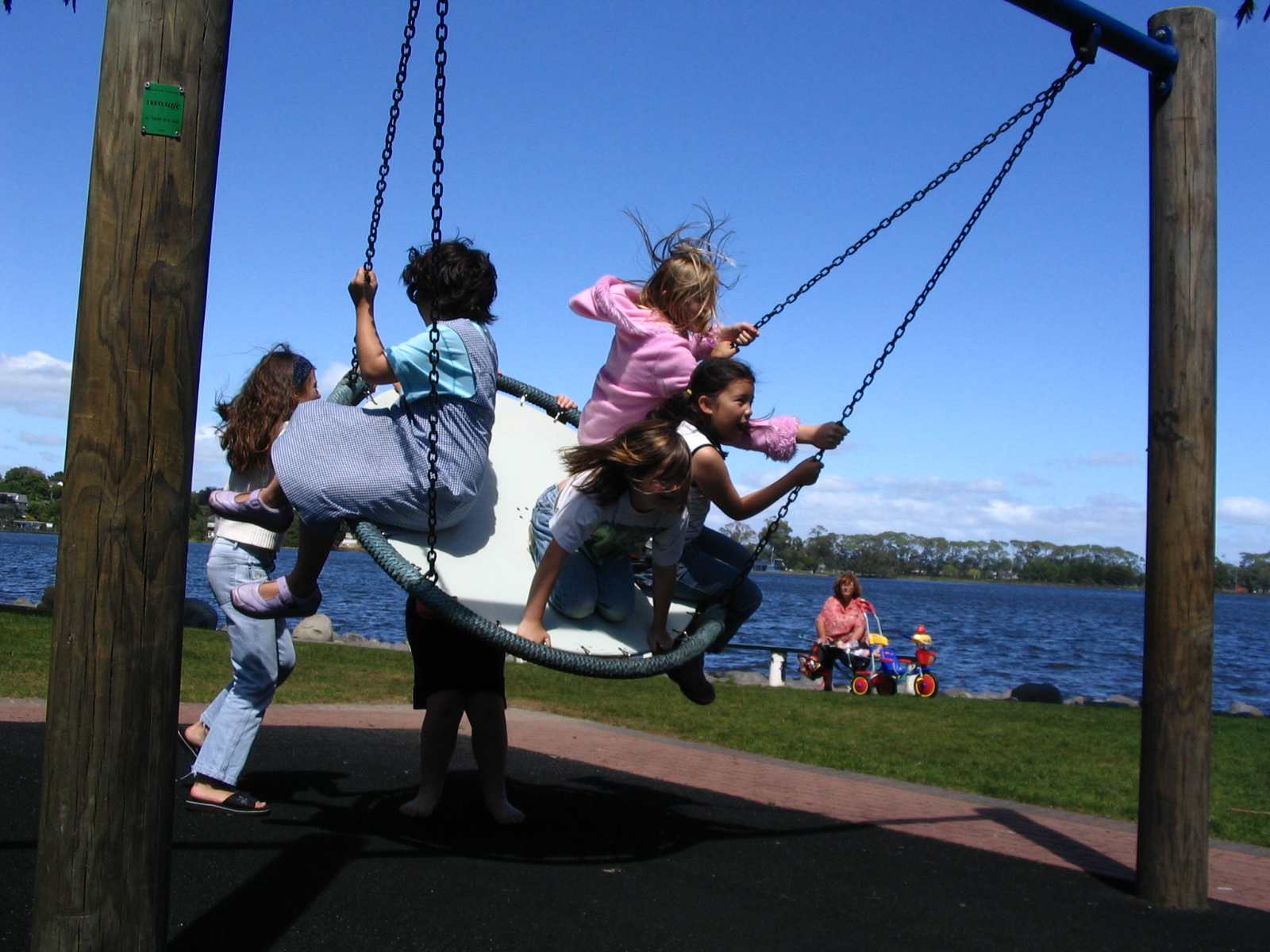
No matter how many times she has seen your children on the
swing set (twice daily for 1 to 2 years depending on the goat in question), the sight of them will bring her to a stunned halt. You will have to coax her,
cajole her, yank and pull her past this daily terror. Meanwhile, remember to check in with the kids with comments such as,
"Yes you are going so high!" "You can do it! Pump your legs!" "Forwards and backwards and forwards and there you go!"
Succumb to the pleas, release the goat (she only has one objective in mind anyway if her terror will ever allow her to think again), and spend a few moments pushing the kids on the swings. Don't drop the baby and don't forget to stand sideways so as not to have a swinger crash into her.
Enjoy yourself until the goat recovers her composure. Sigh and follow her to the milk house.
Step 10: Clean Her, Milk Her
Put the baby in her little chair. Although she is convinced she is a ruminant and can handle it, do not let her eat the bedding. It's wood shavings.
The goat has already mounted the stand and is eating. You need to lock her head in the stanchion and clean her udders. This is the easiest part of the procedure.
Grab a teat, close off the top of the teat with your thumb and index finger, close the middle, ring and pinkie in succession. Milk comes out. Aim. Keep aiming and keep an eye on the baby. Get a rhythm and keep it until she's dry. Clean the goat up again, get the milk pail out of the way, and spray her teats with an iodine and water solution. Pick up the baby, maneuver the goat off the stand, and repeat steps eight, nine, and ten with the cranky goat.
Step 11: The Cranky Goat
She will not get onto the stand. Drag her. She will not eat, coax her with sunflower seeds. She will eat those. Close the stanchion. Dodge that hoof. Clean her. Dodge hoof. Milk with one hand (the other one will hold the bucket away from the hoof). Aim. Watch the baby. Watch that hoof. Watch that bucket. Do not cuss. The children will wander in. Dodge that hoof. Swing that pail. Do NOT cuss. The dog will clean that. WATCH THAT BABY. Stop the milking and stop the baby. Resume milking. Watch that other hoof, too. The cats will clean under there. Dodge that dog and cat fight. Pick up baby, pick up milk. Find out who's crying and why. Reassure child that the dog and cat will be friends after the milk is gone. Banish the dog and cat from the milk shed. Cat will slink back in through hole in the back. Dog will whine at locked gate. Put down baby. Resume milking. Do not cuss when kicked. You forgot to watch.
Step 12: Blame Daddy
When a toddler repeats a "word we only use when milking Rosie, honey" during that quiet pause at church, remember this rule and point his way. Look innocent.
Step 13: Finishing Off
Put that
uncussed goat back into her goat yard, gather up the milk, the baby, and the children and head back inside to process the milk.
That process involves heat and homeschooling.
*Dogs have short memories. Although the dog has accompanied you throughout the entire procedure, from waking to milking, a new setting demands a repeat of a doggie greeting ritual which involves jumping up and not on you, barking and/or whimpering, excited wiggling, tail flailing, and drool. It's in their contract. The cats on the other hand, may be greeted once daily, as needed.